
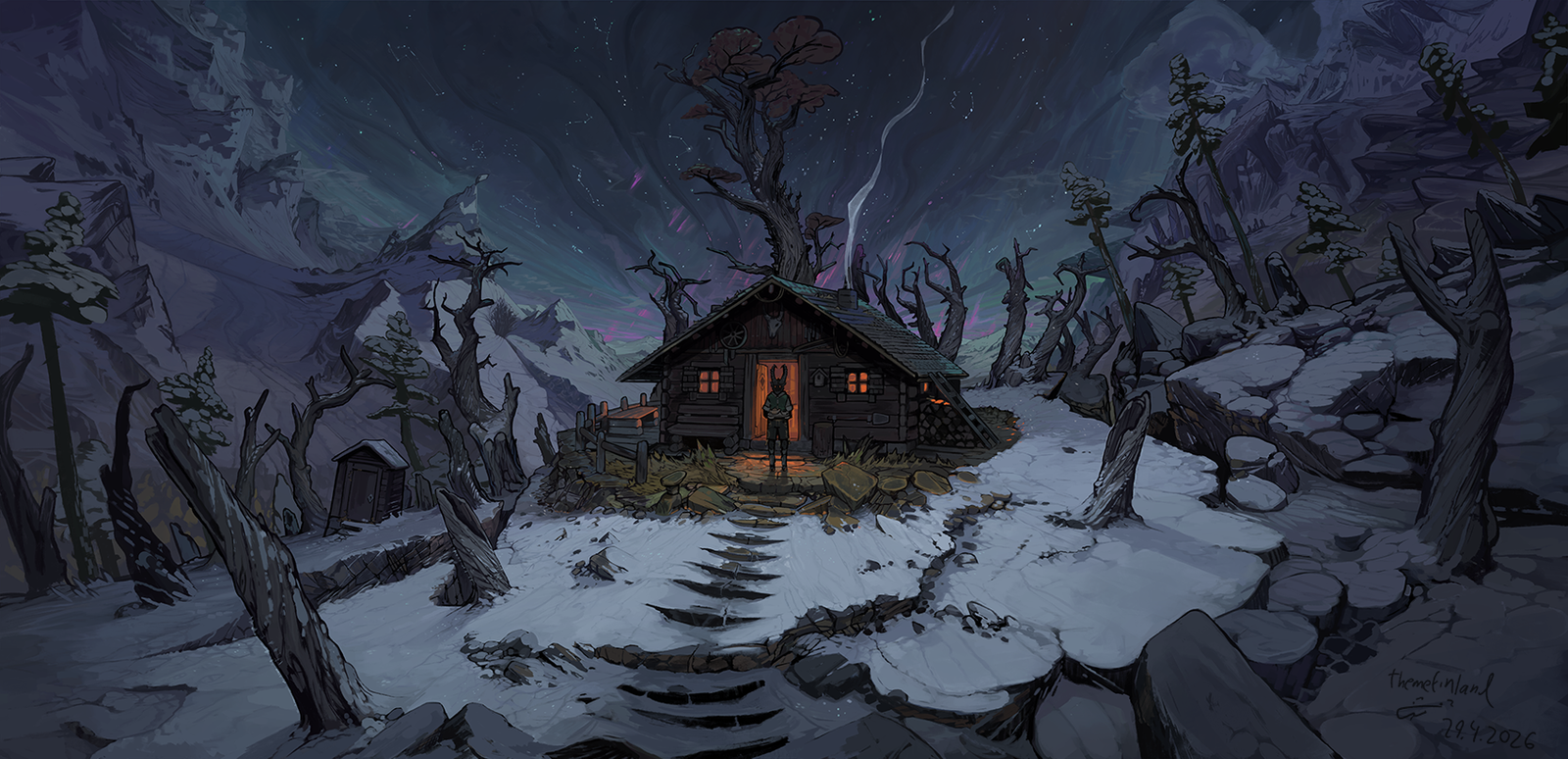
During a routine delivery, a space courier finds something strange hidden among his cargo. The wrong sort of people want it back.
The comms panel crackles twice before the station picks up.
“Atrion Station, this is Chasma Couriers, vessel Calyx, inbound on vector one-one-seven.”
There’s a pause. There’s always a pause.
“Calyx, Atrion Station. State your business.”
“Requesting docking clearance. I have a delivery manifest, four crates, consignment tag sierra-mike-four-four-one-two.”
Another pause. If I had angled the pilot’s chair right, I could have stretched my legs as I wait for them to pull out the paperwork. But this is not the right angle. I’d only get my feet tangled in the electrical cables crammed beneath the nav console.
There’s a pop as the voice comes through too loud for the old speakers to handle. “Clearance granted, bay fourteen. Transmitting approach corridor now.”
The data comes through on the main display. Clean and simple. A slow arc into the station’s rotation. I key it into the autopilot, wait for the confirmation chime, and feel the subtle shift as my ship adjusts course. The starboard monitor flickers in its lower corner. I give it a tap out of habit.
It doesn’t help. In fact, I swear it made the flicker worse.
While the autopilot does its work I sit for a moment and listen to the ship. The Calyx has a particular sound at cruising speed—a low, layered hum that comes up through the floor and into the seat frame, made up of a dozen mechanical voices all talking at once. The approach corridor ticks down on the main display, distance markers counting steadily backward, and through the viewport the station is growing from a point of light into a structure with shape and detail. Like a spinning top on the verge of falling over, it hovers against the empty blackness of space, pinpricks of light scattered across its metal exterior.
I squeeze myself out of the chair and duck into my cabin. I step past the fold-out table where my half-eaten ration bar sits next to a lukewarm mug of coffee. The cabin light has that warm amber cast it always has, turning everything the colour of late afternoon on a world I haven’t been to in years. The bunk bed is scrunched up against the wall, sheets tinted the same yellow as the light. I make a mental note to clean it later. The same mental note I’ve been making for three months.
The cabin’s always been tight. Fitted together like a puzzle. I could stand in the middle and almost touch both walls. One of the joys of being a courier; your cargo enjoys spacious accommodation whilst you feel like a rat in a cage.
But at least it’s my cage.
The cargo hold door sticks halfway, as it does. I lift it on the rail and shoulder it the rest of the way open. The flat, buzzing light of the hold greets me. Six white crates sit in a neat row down the centre, strapped to floor anchors with ratchet webbing. Standard contract goods—machine parts, I think, or fabrication stock. The manifest doesn’t always go into detail and I’ve learned not to care much beyond weight and dimension and legality.
The hold always feels like a different ship. The cabin and cockpit have warmth to them—things chosen, things placed, things worn into familiarity. And, of course, literal warmth. Meanwhile, the hold is pure function. The cold air smells of packing foam and the metallic tang of the sub-deck, where cables and piping run beneath metal grilles along the floor.
I pull the tablet from its hook by the door and start the walkaround. Crate one. Ratchet straps are snug, webbing frayed but holding firm, and the seal strip is unbroken. Nothing to suggest the load moved when it shouldn’t have.
The second and third crates are the same story: straps tight, seals intact, no visible damage. I scan each tag and tick them off, the little beep of confirmation echoing in the metal-walled space.
Crate four.
I stop. The side panel is slightly open. Not much, maybe a centimetre or two. The seal strip has been pushed inward rather than broken outward. I crouch down and run my thumb along the edge. The latch is intact but disengaged, as if someone—or something—worked it open from the outside and then pulled it mostly shut behind them.
I sit back on my heels for a moment. This is the part where a smarter person would just strap it up, deliver as-is, and let the client deal with it. But if the goods are damaged and I didn’t flag it, that’s on me. And if they’re damaged and I did look but said nothing, that’s also on me, just with extra steps.
The joys of being a one-man crew. There’s no one else to defer decisions to—or the blame.
I set the tablet down on the grating, get a grip on the panel edge, and pull it open. Light floods in.
At first I don’t understand what I’m looking at. The crate is packed with foam-cradled components—cylindrical housings, wiring looms, other electrical shit I couldn’t name—but they’ve been pushed aside to make a foam-cushioned gap along the edge. And in that gap, wedged between a turbine housing and the inner wall of the crate, is something alive.
It flinches when the light hits it. Two eyes—bright, vivid amber—stare up at me from a face not remotely human. Black fur covers a protruding muzzle and a skull shaped all wrong, too long at the back and too narrow through the brow. It’s hunched in on itself, knees drawn up, legs bent the wrong way. Four-fingered paws grip its own shins, clasped tight with fear or cold or both.
It’s an Expie. I’ve never seen one in person, only in dock bulletins and the occasional news feed. Genetically engineered workers used for outworld excavations by some company I forget the name of.
It’s smaller than I expected. If it stood up it’d come to maybe my chest, though it shows no intention of standing up. It presses itself further into the corner of the crate. Those orange eyes stay fixed on me, wide and unblinking.
I reach around the edge of the crate and tear the manifest off. I press it against my nose, trying to read and keep my eyes on the creature at the same time. Technical product names and interstellar reference codes, quantities in the hundreds, all vaguely electronic-sounding.
Definitely no Expie, quantity one.
The autopilot chimes softly from the cockpit. Five minutes to docking.
I crouch there in the buzzing light of the cargo hold, one hand still on the crate panel, staring back at the creature cowering in my delivery.
The crowbar hits the first crate with a crack that makes me flinch.
I’m standing at the foot of the ramp with my arms folded, trying to look like a man with nowhere particular to be and nothing particular to worry about. Bay fourteen is a standard berth, scuffed decking, magnetic clamps holding the Calyx in place, the faint industrial perfume of recycled air and hydraulic fluid.
The starhand Atrion sent is a stocky woman with close-cropped hair and a barcode scanner hanging from a lanyard around her neck. She works the crowbar under the first crate’s lid, levering it up in three sharp motions.
I watch her hands. I watch the crate. I watch the open hold behind her where the remaining five sit in their neat row, waiting their turn.
Four crates. She’s only here for four of them. The other two are bound for a separate consignment, different destination. But the four she wants include number four, and number four had something living in it ten minutes ago.
Had. Past tense. Hopefully.
When the autopilot chimed, I’d done the only thing I could think of—I shoved the panel mostly closed, left it exactly as I’d found it, and went back to the cockpit. Strapped in. Watched the station’s docking guide lights pull me into bay fourteen. And spent every second of it thinking about those orange eyes staring up at me from a nest of foam and wiring looms.
The starhand sets the crowbar across the lip of the open crate and leans in, checking components against her scanner. Each one chirps confirmation. She nods to herself, apparently satisfied, and moves to crate two.
I unfold my arms. Fold them again. Lean against the ramp’s hydraulic strut. It’s cold through my jacket.
I don’t know when it got in. That’s what keeps turning over in my head. I picked up the consignment at Torren Relay six days ago. Standard loading procedure—dock crew brought them aboard on a pallet jack, I checked seals and signed off, and they left. I didn’t open anything. The seal strips are there for a reason; if they’re intact when you pick up and intact when you deliver, the chain of custody holds and nobody asks questions.
But that seal strip on crate four wasn’t broken. It was pushed inward. Which means either someone opened it before I loaded—unlikely, since the dock crew would have flagged a broken seal—or something opened it from outside, after it was already in my hold.
Six days. That thing could have been in my cargo hold for six whole days.
The starhand cracks open crate two. More chirping. More nodding.
Where did I stop between Torren and here? Fuel depot at Pott’s Point, four days in. I’d left the hold sealed but the Calyx was docked to their service arm for about nine hours while the tanks filled and I slept. Could it have come aboard then? Pott’s Point is barely more than an automated platform with a vending machine and a toilet. Not the sort of place where Expies roam free.
Before that, though, Torren Relay itself. It supplies mining colonies in the surrounding systems. Busy. Crowded. The kind of station where dock workers and transients and people you don’t ask questions about all share the same corridors. If an Expie was trying to disappear, to tuck itself into a crate bound for anywhere-but-here, Torren would be the place to do it.
But the other thing gnawing at me: I’m not sure it is a stowaway. Wouldn’t be the first time I’ve been hired to deliver mundane cargo that turned out to be hiding something less mundane. Banned AI processors, restricted pharmaceuticals, components that didn’t match the manifest because the real goods were packed underneath.
It’s one of the quieter realities of courier work—sometimes the client is using you to skip customs. Or avoiding tariffs. And as long as you don’t know, you don’t know. Plausible deniability, the courier’s oldest friend.
Crate three opens. The starhand runs her scanner. Chirps. Nods.
But those things had always been… things. Objects. Contraband with a shelf life and a resale value. Never a living, breathing creature staring up at me with fear in its eyes.
She steps to crate four, positions the crowbar, and hammers it under the lid. The wood—or whatever composite passes for wood these days—groans and pops free. I hold my breath.
She leans in, scanner ready. It chirps once. Twice. She pauses, tilts her head, and reaches into the crate to push something aside.
“Packed this one strange,” she says, not looking at me.
My throat tightens. “How so?”
She gestures into the crate’s interior. “All this space here, along the edge. Like someone shoved everything to one side. See—whole gap there, foam’s all bunched up against the wall.”
The nest. She’s looking at the nest.
“Huh,” I say.
She pokes at the compressed foam with one gloved finger, scratches the back of her head, then straightens up and runs the scanner over the remaining components. Chirp. Chirp. Chirp. She checks her readout, scrolls through the list, and gives a short, satisfied nod.
“All present and accounted for. I’ll get the dolly.”
She doesn’t mention the damaged side panel. Doesn’t notice it or doesn’t care. She just marks something on her own tablet and walks off toward the bay’s equipment locker.
I stand there a moment longer, watching her go. Then I look into my cargo hold, where white light buzzes over the two remaining crates—the ones that aren’t hers, the ones staying with me.
It takes her two trips with the dolly to clear out the four consignment crates. I help where expected, keeping my hands busy and my mouth shut. She gives me a receipt chip, I thumb it, she nods and walks off.
Transaction complete.
I climb the ramp back into the hold. The air is the same as always—cold, metallic, faintly chemical. The two remaining crates sit against the port wall, still webbed down to their floor anchors. The spaces where the other four had been are just empty grating now, anchor points exposed like missing teeth.
I hit the lever by the door. The ramp whines, lifts, and folds itself shut with a heavy thunk that rumbles through the deck plates. The bay noise—the hum of station systems, the distant clatter of other work, welding in a workshop in the far corner—it all cuts to silence. Just me and the ship again.
I stand still for a moment and listen. The Calyx’s idle hum. The hiss of air. A faint buzz from the overhead strips. Nothing else.
“Alright,” I say, to no one.
I start with the two remaining crates. I check the seal strips—both intact, unbroken, undisturbed. I press my ear against each one like an idiot, as if I’d hear breathing through composite panelling. Nothing. I check behind them, in the narrow gap between crate and hull. Nothing. I check the corners of the hold, the space behind the door mechanism, the shallow recess where the ramp folds in.
Nothing.
No sign of it.
Maybe it felt it had overstayed its welcome. A hitchhiker hopping from station to station, hiding in one crate before moving on to the next. That would make things a whole lot easier for me.
The cargo hold door sticks on the rail. I lift and shoulder it open—the familiar two-step—and pass through into the cabin. The amber light greets me. The fold-out table, the half-eaten ration bar, the mug of coffee that’s gone from lukewarm to room temperature to whatever comes after that.
It’s a narrow room. There’s the bunk, folded up against one wall. The bench opposite, lid closed over its storage compartment. A little kitchen strip along the back wall. And the closet.
There’s only one place in here where anything larger than a rat could hide.
I step over to the closet and put my hand on the latch. It’s a shallow thing, barely deep enough to hang a few jackets in. I take a deep breath, then pull it open.
My stomach drops.
Not because the Expie is there. It isn’t. But my self-defence pistol is—shoved into the bottom corner, half-buried in a pile of unwashed clothes.
I’d left it on the bench two days ago, I’m almost certain of it. But here it is, wedged behind a crumpled thermal underlayer, grip poking out at an angle.
Maybe I moved it. Maybe I put it there and forgot.
Or maybe something with paws and an affinity for dark cramped spaces moved it for me.
I pick it up, turning it over in my hands. Then I cross the cabin in two steps and lift my pillow. I slide the pistol underneath. Hardly a vault, but it’s the last place that thing—or anyone for that matter—would think to look, I hope. And it’s safe enough. I always store the ammunition separately. Bullets in the bench storage compartment, pistol somewhere else. Mum taught me that when I was twelve, the day she showed me her old service weapon.
The gun lives in one place, the bullets live in another, and they never meet unless you mean it.
I head back to the cargo hold. The door sticks. I lift. I shoulder. The buzzing light, the cold air, and the two crates sitting exactly where I left them.
I’m halfway across the hold when I glance down and stop.
Through the metal grille beneath my feet, in the shallow sub-deck where the cables and piping run, two orange eyes look up at me.
It’s pressed flat underneath the pipes, wedged into the narrow crawlspace between the deck grating and the hull floor. Black fur against black cabling, almost invisible if not for those eyes.
It must have pried up one of the grille sections—they’re bolted, but loosely. It’s watching me with that same wide, unblinking stare from earlier. Its breath fogs in the cold air that pools in the sub-deck.
I’m standing directly over it. My boot is centimetres from its face, separated by a thin strip of metal grid.
We look at each other.
I open my mouth. The reasonable thing to say is something like: You don’t have to stay down there. There’s a cabin. It’s warmer. Basic decency. The kind of thing you’d say to any creature you found shivering in a crawlspace beneath your feet.
But the words stall somewhere between my brain and my tongue, because even if this thing could understand me, the cabin is my cabin. The only one. The ship was built for one person—one bunk, one chair, one mug’s worth of coffee at a time. There is no guest quarters. There is no spare room. The cabin is my bed and my kitchen and my every private square inch that I own in this endless abyss of space.
Then there’s the cockpit, which is just a seat and console—and I doubt this thing has its pilot’s license.
And so that just leaves the hold. Cold, bare, humming with strip light—and awfully spacious.
I close my mouth. The Expie doesn’t move. Its paws are wrapped around a pipe, fingers curled tight. It’s gripping one of the heating conduit returns. Warm, relatively speaking. It chose that one on purpose.
I stand there in the buzzing light of my cargo hold, looking down through the grating at a creature I didn’t ask for, don’t understand, and have absolutely no plan for.
The Calyx hums around us, patient and indifferent, waiting to be told where to go next.